

50 AE vs 50 BMG: The Complete Comparison of Two Iconic Caliber Giants
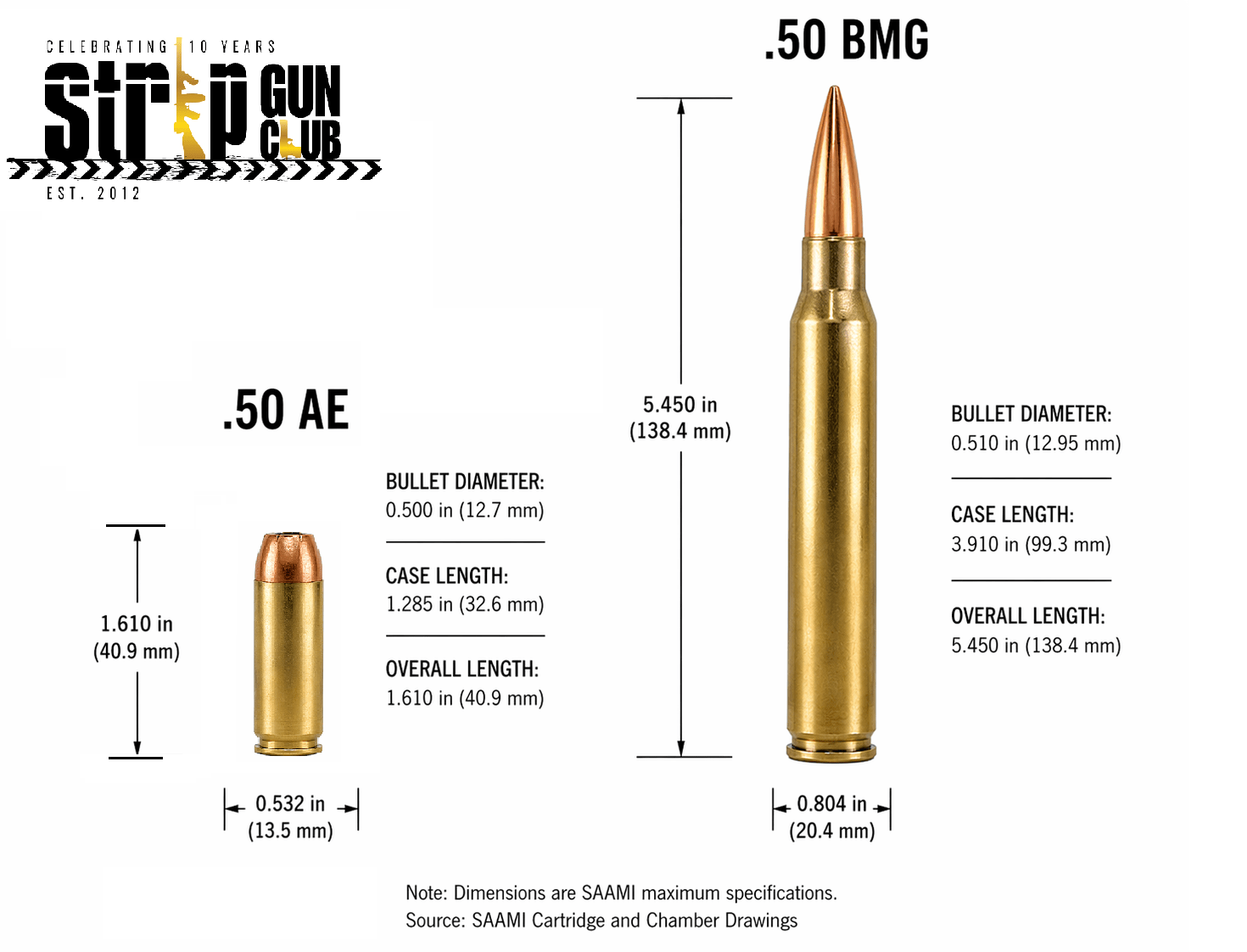
When handgun enthusiasts and rifle shooters compare the 50 AE vs 50 BMG, the conversation quickly reveals two cartridges that share a bullet diameter of roughly half an inch but occupy entirely different worlds in terms of power, range, and applications. Both rounds are synonymous with raw stopping force, yet the difference between them is enormous. In this post, we’ll compare every aspect of these cartridges from design to shooting performance so you can understand which cal fits your specific needs.
What Is the .50 BMG? The Browning Machine Gun Cartridge
The .50 BMG, short for Browning Machine Gun, traces its origins to John Browning, who developed the cartridge in the early 20th century for military use. Originally designed to feed heavy machine gun platforms, the .50 BMG quickly became one of the most powerful military cartridges in the world. Today this caliber remains primarily a military round, chambered in heavy machine gun emplacements, anti-materiel rifles, and long range shooting platforms like sniper rifles – all of which you can experience at our Las Vegas shooting range.
The .50 BMG’s longer case length and massive powder capacity make it a cartridge of extraordinary power. It delivers approximately 13,241 foot-pounds of muzzle energy, a staggering figure that verifies its reputation. The .50 BMG launches projectiles weighing between 647 and 800 grains at velocities around 2,820 fps, giving it unmatched range and penetration among conventional small arms ammunition. In terms of bullet diameter, the .50 BMG measures a true .50 caliber across, though its case dwarfs anything found in handgun cartridges.
Applications for the .50 BMG include anti-materiel purposes, long range sniper engagement, and long range precision competition. The .50 BMG’s military heritage means availability is relatively broad, though the ammunition tends to be significantly more expensive compared to most handgun cartridges. This caliber is commonly used in heavy machine gun setups, sniper rifles, and anti-materiel rifles, making the .50 BMG suitable for long range shooting and disabling vehicles.
What Is the .50 AE? The Action Express for Handguns
The .50 Action Express, or .50 AE, was developed by Action Arms in the 1980s as a high-power handgun cartridge designed specifically for semi automatic pistols, most notably the Desert Eagle pistol. While the .50 AE shares a similar bullet diameter with the .50 BMG, the comparison ends there. The .50 AE Action Express cartridge was built with handgun enthusiasts in mind, delivering maximum power from a gun you can hold in your hand.
The Desert Eagle, one of the most powerful handguns in the world, became the primary gun chambered for this cal. The .50 AE generates about 1,517 foot-pounds of muzzle energy and fires projectiles between 300 and 410 grains at roughly 1,450 feet per second. These numbers make the .50 AE one of the most powerful rounds available for semi automatic pistols, though the recoil is substantial. The .50 AE’s bullet diameter matches the .50 BMG at approximately half an inch, but everything else about the .50 AE, case length, overall capacity, is scaled for handguns rather than rifles.
Applications for the .50 AE include silhouette shooting, hunting large game, backcountry self defense, and collecting. The .50 AE excels in metallic silhouette shooting competitions, where competitors engage heavy steel targets at distances up to 200 meters. The .50 AE is primarily used in semi-automatic handguns, particularly the Desert Eagle, and is favored for its power in self defense, hunting, and recreational shooting among handgun enthusiasts.
| Specification | .50 AE | .50 BMG |
|---|---|---|
| Full Name | .50 Action Express | .50 Browning Machine Gun |
| Designed | 1988 | 1910s |
| Designer | Evan Whildin / Action Arms | John Browning |
| Bullet Diameter | .500″ (12.7mm) | .510″ (12.95mm) |
| Case Length | 1.285″ (32.6mm) | 3.91″ (99.3mm) |
| Overall Length | 1.610″ (40.9mm) | 5.45″ (138.4mm) |
| Case Type | Rebated rim, bottleneck | Belted, bottleneck |
| Typical Bullet Weight | 300–325 gr | 647–800 gr |
| Muzzle Velocity | ~1,400–1,500 fps | ~2,800–3,000 fps |
| Muzzle Energy | ~1,400–1,600 ft-lbs | ~13,000–15,000 ft-lbs |
| Primary Firearm | Desert Eagle pistol | Barrett M82, M2 Browning HMG |
| Use Case | Handgun hunting, sport shooting | Anti-materiel, long-range, military |
| Effective Range | ~100 yds | ~1,800+ yds |
| Typical Cost (per round) | ~$2–$3 | ~$3–$6+ |
50 AE vs 50 BMG: Key Performance Differences
The core difference between these two rounds comes down to scale and purpose. Let’s compare the specific numbers in-depth.
Power and Energy
The .50 BMG delivers roughly 13,241 foot-pounds of energy compared to the .50 AE’s 1,517 foot-pounds, nearly nine times the power. This difference verifies that while both caliber options are powerful, the .50 BMG operates in an entirely different league, designed for applications where extreme energy delivery at range is essential.
Bullet Weight and Diameter
Both the .50 AE and .50 BMG share a diameter of roughly .50 caliber, but the .50 BMG’s projectile weight of 647–800 grains dwarfs the .50 AE. This difference in mass translates directly to greater energy retention for the .50 BMG round at extended range.
Velocity and Range
The .50 BMG achieves velocities around 2,820 feet per second, while the .50 AE typically reaches about 1,450 feet per second. This gap highlights the .50 BMG’s superior speed and effective range, which extends past 1,500 meters using precision sniper rifles. The .50 AE, by comparison, is primarily effective inside 200 meters, adequate for handguns but a fraction of the rifle cartridge’s reach.
Recoil
Both caliber options produce significant recoil in different contexts. The .50 BMG is fired from heavy rifle platforms, often weighing 25 pounds or more, which absorb the force due to their size. The .50 AE channels its energy through the Desert Eagle and similar handguns, producing sharp recoil that demands respect despite the gun’s size.
Availability, Cost, and Legal Considerations
Both the .50 BMG and .50 AE carry a high price tag, and bargains are unlikely given the nature of these large cal rounds. The .50 BMG ammunition is more readily available due to its military heritage and wide usage, but it tends to be significantly more expensive per round. The .50 AE ammunition is less common, making it relatively more expensive with a narrower range of available options compared to more popular handgun cartridges.
Legal availability depends on where you live. In Nevada, for instance, .50 cal rifles and handguns are legal, and the state’s relaxed gun laws make ownership straightforward provided federal requirements are met. However, armor-piercing ammunition is prohibited under federal and state law. It’s also worth noting that the .50 BMG is illegal for big game in Nevada due to restrictions on case length exceeding 3 inches, while the .50 AE is legal with regulations that allow centerfire handguns with a barrel length of at least 4 inches. A quick Google search for your state wildlife agency will point you to the most current regulations.
Browning Machine Gun Round vs Action Express: Choosing the Right Cal
Choosing between the .50 BMG and .50 AE comes down to your specific applications. The .50 BMG, the original Browning Machine Gun caliber, is designed for long range precision and massive energy delivery, primarily military applications including anti-materiel purposes. If you’re into long range shooting or competition, the .50 BMG is the round to account for. This cal was developed for shooting machine guns and snipers, not something you carry by hand.
The .50 AE, on the other hand, is designed for shooters who want maximum power from handguns. Whether your applications involve hunting in the backcountry, self defense in bear country, or recreational shooting, the Desert Eagle and similar handguns chambered in this cal deliver an experience few other gun options can match. This caliber is capable of impressive feats that handguns in any other cal simply cannot replicate. Keep in mind that the weight and recoil make the .50 AE primarily a range gun or a specific-purpose sidearm, not an everyday carry for most handgun owners.
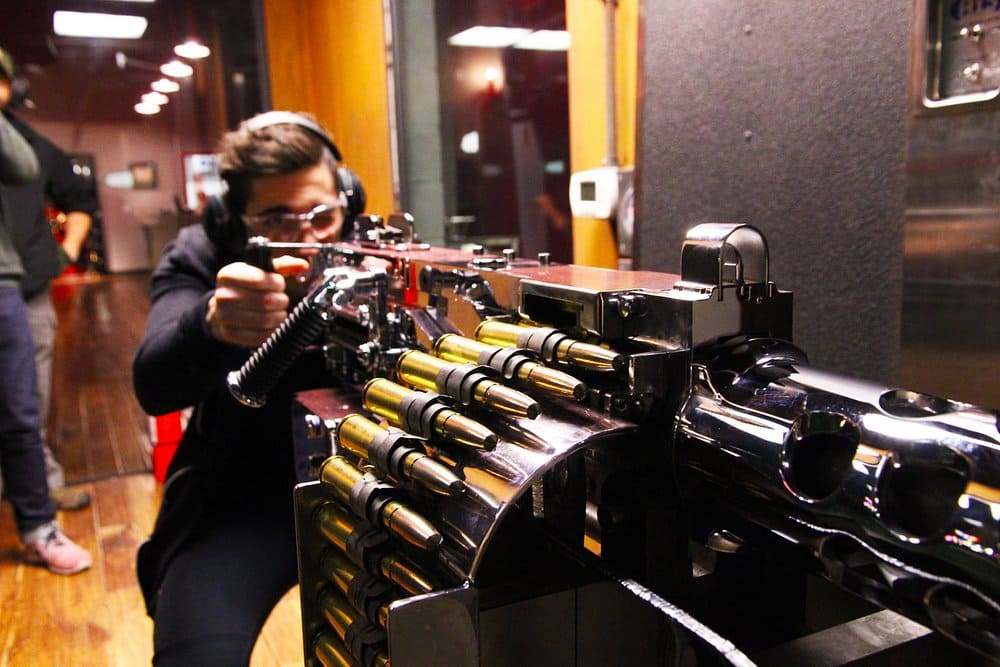
In terms of this comparison, the .50 BMG and .50 AE were developed for fundamentally different worlds. The two caliber options serve distinct roles. Compare your needs against what each caliber offers, and the right choice becomes clear. Both the .50 AE and .50 BMG are powerful, iconic, and more than capable of extraordinary things in their designed roles.
Ready to shoot both? Our Big Fifties shooting package lets you experience the .50 AE and .50 BMG side by side at our Las Vegas shooting range. No better way to settle the debate yourself.
Interested in more caliber comparisons? Check out our deep dives on: